
Why Your Steel Quote Expires: What Actually Moves the Price in Kenya
Steel is priced off a global commodity and a local exchange rate. Neither holds still.
By Safeworld Technical Desk
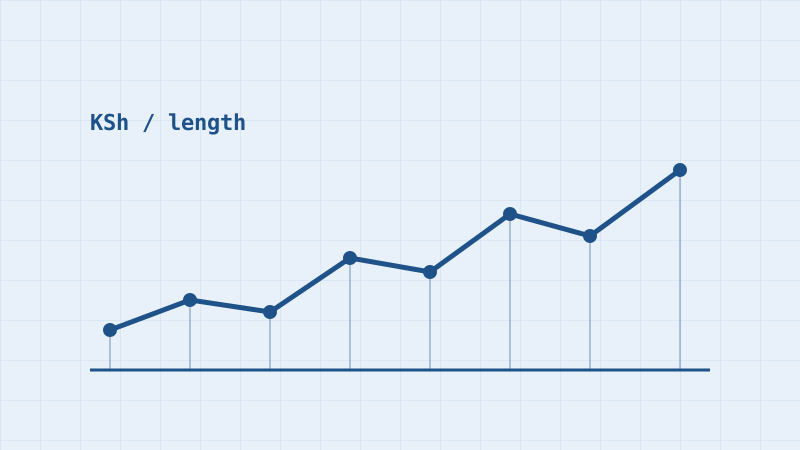
Some building materials hold their price long enough for a yard to post a number and leave it up for weeks. Steel does not work like that, and the first time a contractor meets this it usually feels like being messed around. It is not. It is what the product is.
Where the price comes from
Reinforcement bar is rolled from billet, and billet is either imported or made locally from scrap. That puts at least three moving parts behind every quote:
- Billet and scrap prices, which move on global demand and freight.
- The shilling, because the input is priced in dollars. A weaker shilling raises the landed cost before anyone in Kenya has done anything.
- Local demand, which is seasonal. Building slows in the heavy rains and picks up after, and the price follows.
Energy and transport sit on top of that. None of these is a supplier's decision, which is why no yard can promise you a number that holds indefinitely.
What an as-of date means
A proper steel quote carries a date and a validity period. That is not a disclaimer to skim past — it is the most important line on the page. It tells you how long you have to decide before the number has to be re-checked. If you are given a quote with no date on it, ask when it was priced.
Buying a project, not a delivery
The usual mistake on a job running several months is buying size by size as each stage arrives, which means re-pricing at whatever the market is doing that week and absorbing every move. The alternative is to price the whole schedule up front against your take-off and agree a supply programme, so the quantity is fixed even if the deliveries are phased.
That only works if you have a bar schedule. If you do not have one yet, that is the thing to sort out before buying steel — not after.
Comparing quotes without fooling yourself
Three things make two steel quotes look different when they are not. The unit: per bar, per metre and per tonne are wildly different-looking numbers for identical steel. The spec: a 2 × 2 tube in 1.5 mm against the same tube in 2.0 mm is not a like-for-like comparison. And delivery: a yard price with transport added later can land well above a delivered price that looked higher at first. Check all three before deciding anyone is cheaper.
Practical timing
You cannot time this market and should not try. What you can do is avoid buying in a hurry: know your quantities before you need the steel, get the quote dated, and ask what the number is doing before you pay rather than assuming last month's price still stands.
Know the size you need? Send it over and we will price it.
Get a Quote